


.webp)
Precision patient monitoring
Advanced therapies require advanced monitoring
Cureety provides the therapy-specific clinical intelligence layer required to manage today's most sophisticated oncology treatments — moving beyond generic symptom tracking to objective, actionable data from precision monitoring.
The Intelligence Layer
Cureety extends your clinical reach beyond the hospital walls
Unlike generic monitoring tools, our platform is built on therapy-specific algorithms that turn patient signals into structured triage intelligence.


The right questions, in the right way
Every treatment is different, and Cureety tailors monitoring for this. Patient signals are captured and mapped directly to CTCAE grades to ensure clinical relevance

Intelligent Triage
Our algorithm differentiates between routine side effects and critical clinical signals thanks to therapy-specific scoring.

Validated Accuracy
Backed by a high-fidelity algorithm with 95.8% sensitivity and 94.4% specificity for critical. {tooltip} Positea-va study. The algorithm correctly identifies 95.8% of patients classified as "critical" by experts. Only 5.6% false positives.Peer-reviewed and validated over 400 patients. {a:https://ascopubs.org/doi/10.1200/JCO.2023.41.16_suppl.1605}Source{/a}{/tooltip}

Reduced Alert Fatigue
The platform triggers less red alerts than traditional systems by focusing only on clinically meaningful data.

Continuously Updated
Our protocol library evolves with oncology. Every new regimen or drug that enters the market is reflected in updated questionnaires, and triage structure.

Empowered patient self-management
NCCN and ASCO-aligned recommendations empower patients to manage symptoms proactively and stay on track with treatment.

Configurable to your organization
Our experts map your workflows. Technology follows your clinical logic — not the other way around.

Expanding precision care across sites
Clinically aligned monitoring across all sites supports an equitable model — access not determined by location.
“We use Cureety as a tool for remote therapeutic monitoring for all our patients, regardless of the type of cancer or treatment, including chemotherapy, immunotherapy, targeted therapies, and radiation therapy.”
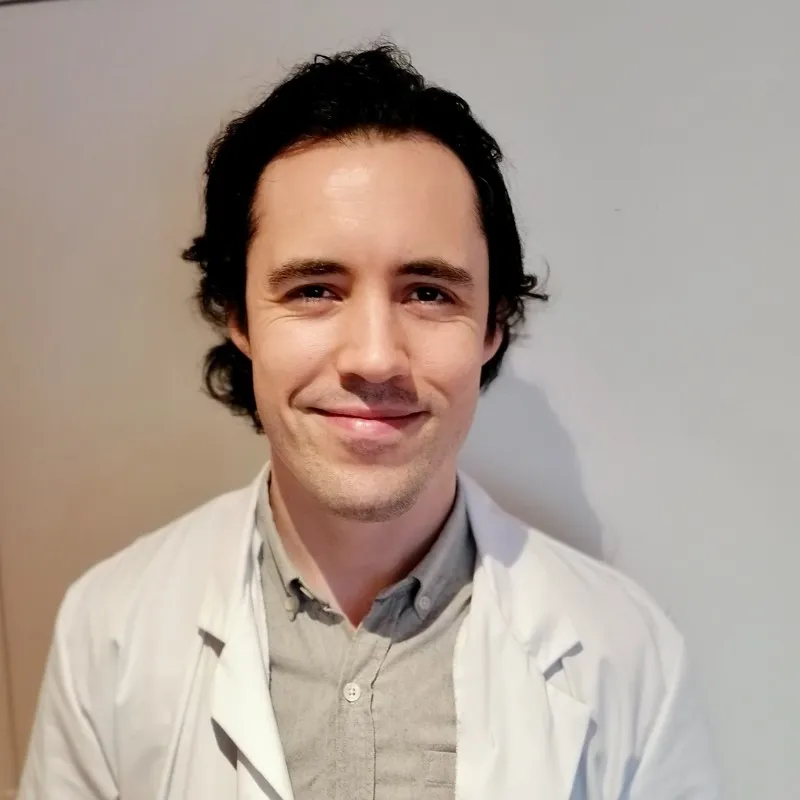
Dr. Thomas Feutren
Radiation oncologist

Meet Cureety
Clinical intelligence for precision care
Cureety helps you deliver context-aware, treatment-specific monitoring and care for patients that reflects the reality of modern oncology. We move beyond generic checklists to address specific treatments, specific risks, and specific patients.

Meet Cureety
Precision care vs. generic monitoring.
The difference between "How do you feel?" and "What is happening?"
PRO-CTCAE based solutions
Collection of feelings
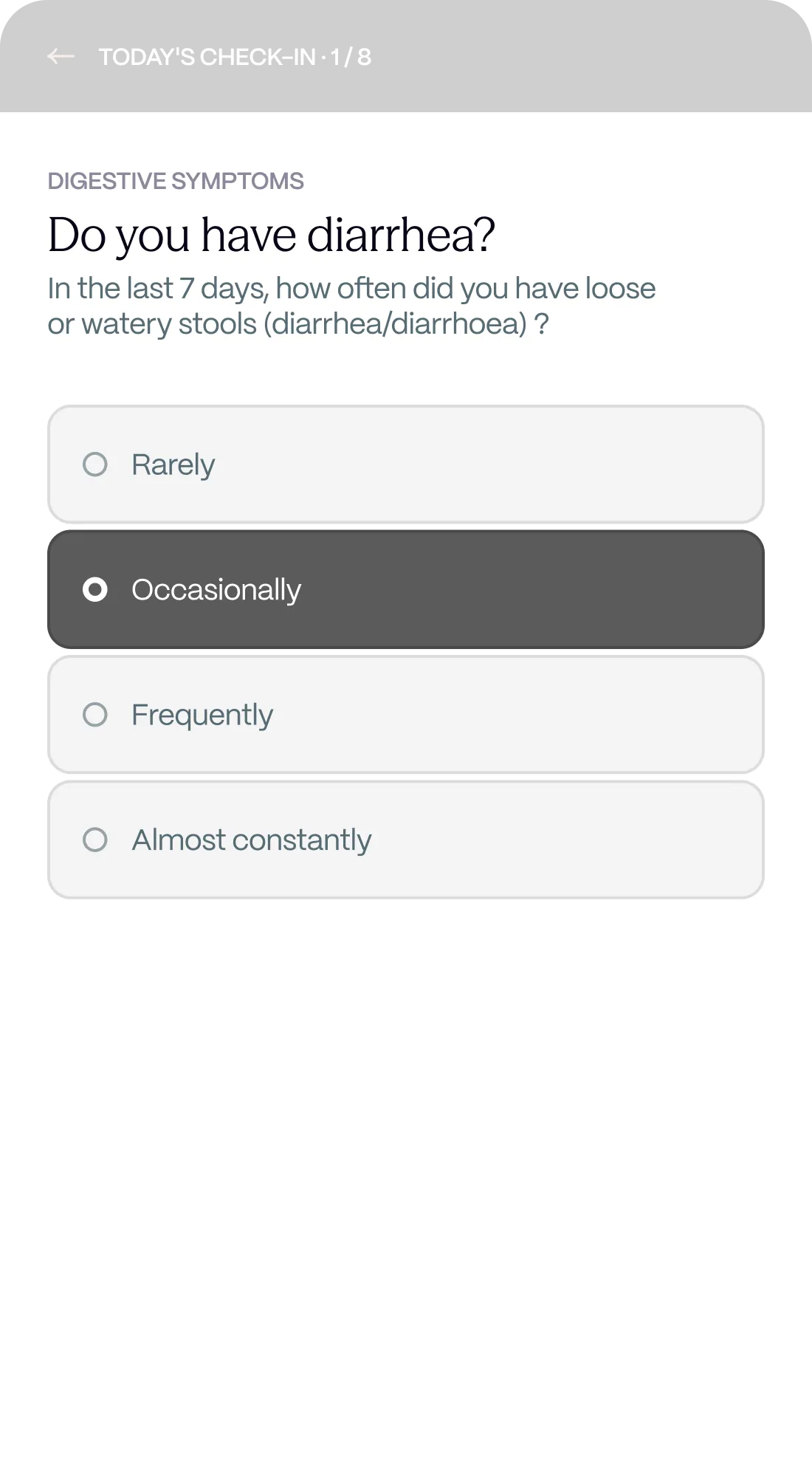
Subjective questions, uncertain outputs
"Rarely", Occasionally" or "Frequently" can mean totally different things to different people.
Cureety's approach based on CTCAE
Precision care
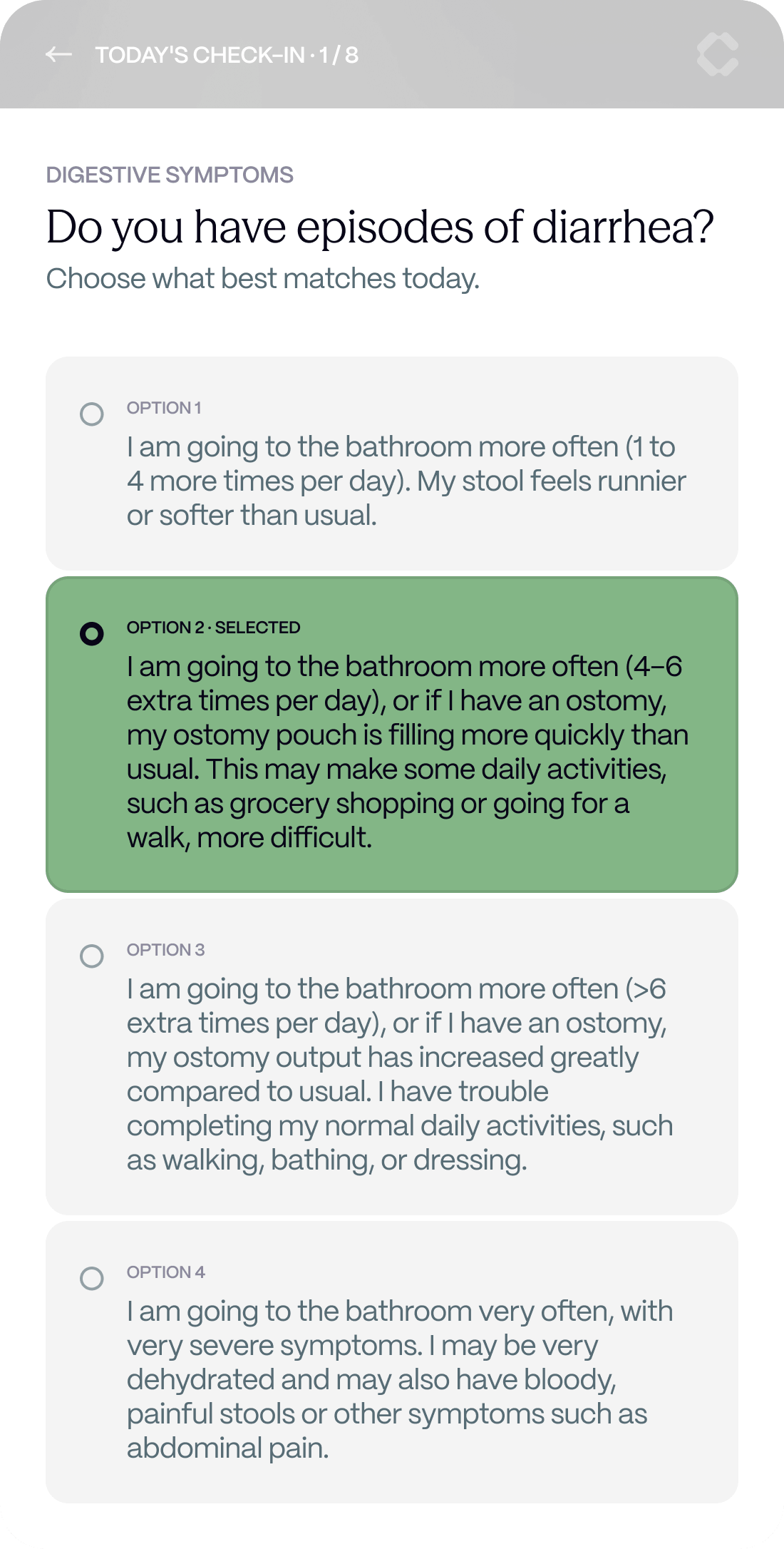
Plain language, structured signal
Patients can select answers or describe their day in their words. Each answer maps directly to a CTCAE grade.
Meet Cureety
Triage that understands
clinical context
Cureety's triage intelligence reviews every symptom against the patient's specific treatment, cancer type, and clinical history. The result: less noise; more accurate, earlier detection of situations that matter.

Clinically validated accuracy
94.4% specificity and 95.8% sensitivity for critical classifications. Peer-reviewed and validated over 400 patients. {tooltip} Positea-va study. The algorithm correctly identifies 95.8% of patients classified as "critical" by experts. Only 5.6% false positives.Peer-reviewed and validated over 400 patients. {a:https://ascopubs.org/doi/10.1200/JCO.2023.41.16_suppl.1605}Source{/a}{/tooltip}

Continuously evolving protocols
Our library is systematically updated for every new regimen to reflect its unique toxicity profile.

Global patient context
Cancer type, treatment stage, and unique medical history — high-fidelity data that reflects the whole patient.

Integrated patient signals
Option to combine patient reported symptoms, vitals and pathology results.

60%
Fewer red alerts than most PRO-CTCAE based systems. Your team responds to signals, not noise. Every alert is meaningful. {tooltip}On average, 60% fewer red alerts are issued than most PRO-CTCAE based systems depending on drug class (4,78 % red, 21,3 % orange on average, on Argos II 2026, based on 2 459 277 AE the 06/04/26) vs, for example, 12,2% red and 27,5% orange alert using PRO-CTCAE (Realworld experience in 33 centres in France and in Belgium - Franzoi, Maria Aliceet al. The Lancet Regional Health – Europe, Volume 44, 101005){/tooltip}

Meet Cureety
The same symptom does not always carry the same risk
Grade 1 dyspnea
Patient on Pembrolizumab
Low-risk signal
Grade 1 dyspnea
Patient on Trastuzumab Deruxtecan
ILD Risk
A patient with Grade 1 dyspnea on Pembrolizumab may not have a high risk. The same symptom in a patient receiving Trastuzumab Deruxtecan could indicate a high risk of interstitial lung disease. Cureety's intelligence layer ensures triage is aligned with the regimen's toxicity profile.
Over 1 million questionnaires completed · validated algorithm with 94.4% specificity and 95.8% sensitivity for critical classifications. {tooltip} Positea-va study. The algorithm correctly identifies 95.8% of patients classified as "critical" by experts. Only 5.6% false positives.Peer-reviewed and validated over 400 patients. {a:https://ascopubs.org/doi/10.1200/JCO.2023.41.16_suppl.1605}Source{/a}{/tooltip}
Cureety's approach based on treatment
CTCAE aligned approach to prioritization intelligence
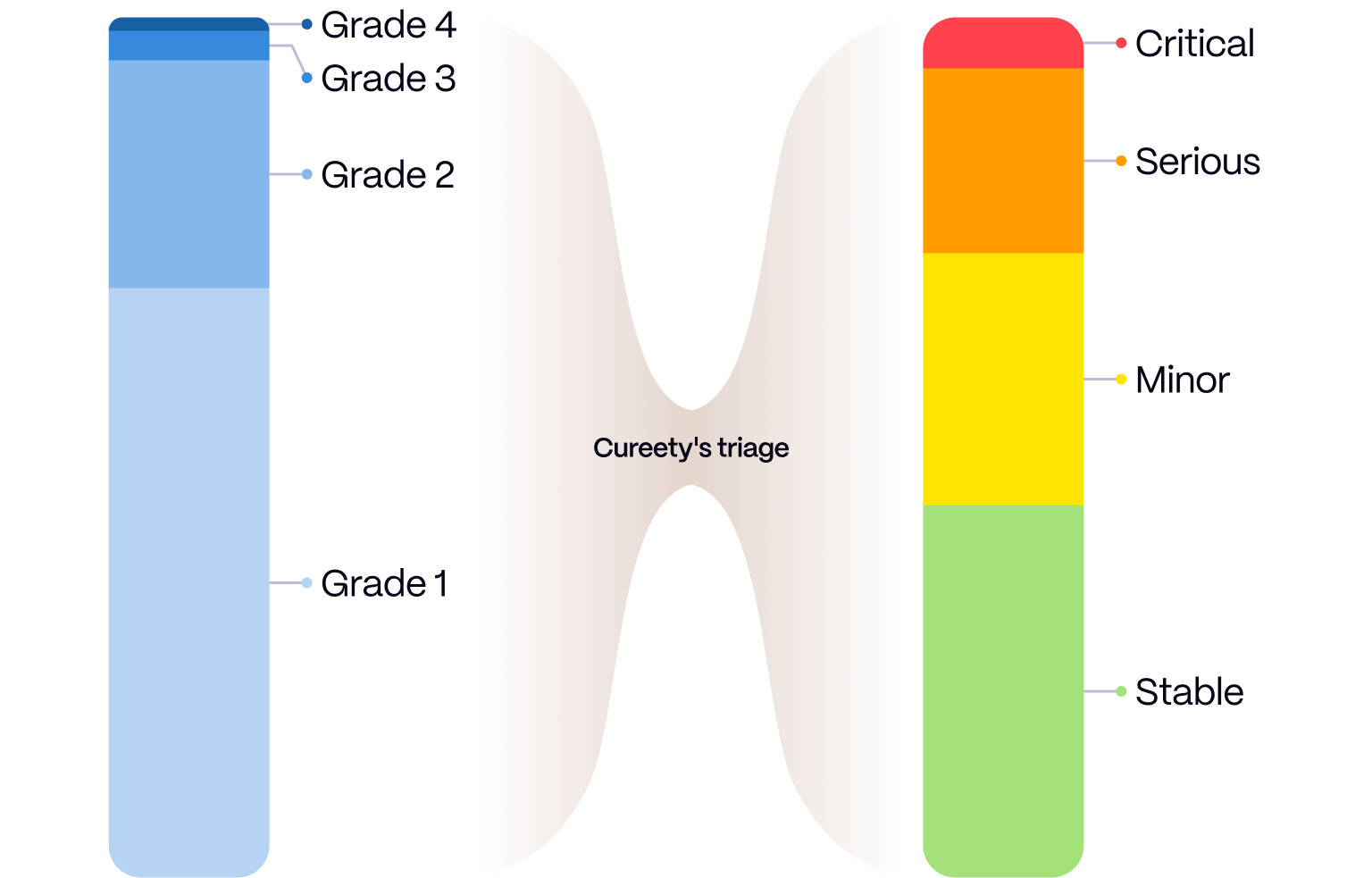
27%
Only 27% of patients flagged for action {tooltip}On average, 60% fewer red alerts are issued than most systems based on PRO-CTCAE depending on drug class (4,78 % red, 21,3 % orange on average, data from Datahub II, based on 2,459,277 AEs, 04/06/26){/tooltip}
Your team focuses on real signals, not noise.


Empowering better oncology care