




Article summary
An AI can ace the oncology exam and still be wrong about the patient in the room: Dr. Philippe Spiess explains why that gap is the real test. Guidelines describe populations; care happens on a person, on a clock where four weeks can change a prognosis. His ask isn't an autonomous clinic, it's a second set of eyes, a visit that's ready on day one, and a tool honest enough to say "I don't know." Plus: why he'd rather AI challenge his blind spots than copy his thinking, and the one thing he'll never automate.
Want to go further? Ask
Dr. Philippe Spiess on clinical judgment, the spaces between visits, and what AI needs to get right in cancer care
An AI system can know the most up-to-date oncology guidelines and treatment standards relevant to a patient's disease and still get the most optimal therapeutic clinical setting wrong.
It is a distinction he thinks the field has not yet taken seriously enough.
“The question is not whether an AI model can pass an oncology examination,” Spiess says. “Of course it can. The question is whether it can be wrong in a way that reaches a patient, and how confident we are that it cannot.”
For Philippe Spiess, that distinction gets to the heart of what comes next for artificial intelligence in cancer care.
AI is already remarkably capable of bringing together large amounts of information. But clinical reasoning requires something harder: understanding which information matters for the patient sitting in front of a clinician, at a particular moment in their cancer journey.
“One of the critical elements that still remains missing is how [AI tools] apply to the specific patients we’re seeing in the clinic today,” Spiess says.
A model may identify a treatment supported by guidelines but fail to account sufficiently for previous nephrotoxicity or liver toxicity. It may recommend standard dosing without recognizing the treatment history, comorbidities or other context that makes that recommendation inappropriate. And it may know relatively little about the patient’s own priorities.
“Guidelines are a framework,” he says. “They’re not necessarily personalized to the individual patient you’re seeing in front of you.”
Spiess speaks about guidelines with some authority, holding several leadership roles within NCCN, including on its Bladder and Penile Cancer Panel and on its Governance Council and Steering Committee. He is emphatic that NCCN guidelines represent the best available level of evidence and the right starting point for care. But they are a starting point. “A guideline is built on populations,” he says. “Care has to be built on a person.”
Guidelines reflect the evidence available from populations studied in clinical trials. The patient in front of a physician may be older, frailer, more comorbid or simply different from the people represented in that evidence.
Personalization of cancer care, in his view, has to be individualized to the specific patient and tumor characteristics in front of you and to that patient’s goals of care — and applied with an appreciation that the findings on which the guidelines are centered may not fully encapsulate the demographics of the patient being treated, whether in age, sex, racial and ethnic background, or geographic distribution.
“The guideline tells you what was studied,” he says. “It cannot tell you whether the person in front of you resembles the people who were studied.”
For Spiess, this is where the distinction between information and clinical reasoning becomes important.

Knowing the options is not the same as knowing what to do
Medicine is filled with decisions that cannot be made simply by identifying every theoretically available option.
Spiess describes patients he has cared for over four, five, six or seven years. That accumulated relationship changes the clinical conversation.
“I know them and I know what may apply and what may not apply,” he says. “That level of personalization is truly the art of medicine.”
A potentially curative operation may be appropriate for many patients with a particular diagnosis, for example, but entirely inappropriate for someone whose comorbidities make its consequences unacceptable. Radiation, chemotherapy, immunotherapy or another approach may be the better choice. The reasoning here is about competing risks: a patient may be far more likely to be harmed by the treatment of their cancer than by the cancer itself and recognizing that is not a failure of ambition but an act of judgment.
That presents an interesting challenge for AI.
A system capable of retrieving every relevant guideline, interaction and potential consideration could theoretically present clinicians with an extraordinary amount of information. But more information does not necessarily mean better care.
“There’s a natural risk that you complicate things more than you should,” Spiess says.
The ambition, he argues, should be the opposite: AI that brings information together and determines what is relevant rather than simply adding another stream of alerts, recommendations and data for clinicians to process.
“They should be really modeled to be an integral part of the team,” he says. “They should be a complement to the clinician versus bombard or submerge the clinician sometimes with some information which may not necessarily pertain.”
The next challenge for oncology AI, then, may not simply be knowing more.
It is knowing what matters, when it matters, for this patient.
“We know a lot happens between visits”
Dr. Philippe E. Spiess
Clinical reasoning has a clock
The when matters.
A patient with a benign renal cyst and someone with an aggressive advanced cancer cannot operate on the same clinical timeline. Spiess believes AI systems need to understand not only the patient's condition but also its acuity and the consequences of delay.
“We treat all the oncology population as one,” he says, describing a challenge he sees across healthcare. For a patient with an aggressive cancer, “potentially four to six weeks will make a difference in prognosis.”
He is careful to note that this is not merely intuition. Published analyses across common cancers have associated each week of delay in starting curative-intent treatment with a measurable absolute increase in mortality, and a four-week delay has been associated with worse survival across surgical, systemic and radiation modalities (Khorana et al., 2019; Hanna et al., 2020). “We accept delays in oncology that we would never accept in cardiology,” he says. “And we rarely measure where in the pathway the delay actually accumulates – which is almost never at the point everyone assumes.”
That makes reasoning across the cancer journey particularly important.
Before a visit, there is information to assemble and work to coordinate. During the consultation, evidence must be interpreted in the context of the individual patient. And after treatment begins, the need for clinical reasoning does not disappear.
In many respects, it becomes more continuous.
“We know a lot happens between visits,” Spiess says. “Toxicities, questions, concerns. Sometimes even second guessing, or sometimes even going through a scan result and not understanding those results and wanting an explanation.”
Healthcare has portals and other mechanisms for patients to contact their care teams, but these interactions are often intermittent. Spiess sees an opportunity for AI to help create something more longitudinal – an ability to follow and interpret the evolving patient journey, with thoughtful clinical oversight.
“A continual patient journey using these tools, obviously with very thoughtful oversight, supervision, sign-off by clinicians, I would say is a very powerful ability.”
That moves the conversation beyond one of the most common applications of clinical AI – helping select or plan treatment. The harder, and perhaps more interesting, question is what happens after the treatment decision has been made.
Symptoms change. Toxicities emerge. Laboratory values move. New imaging appears. The patient's circumstances and preferences can change too.
Clinical reasoning does not happen once. Neither, ultimately, should the systems that support it always provide a recommendation. There are times when additional clinical information is needed in defining the most optimal diagnostic or treatment approach. This is embedded in the approach taken by the OncoBrain team, whose system identifies the clinical gaps in a given case and asks for the missing information, allowing the output and recommendation to be as precise and clinically suitable as possible.
There are times as well when there may not be an appropriate treatment in a given clinical setting and it should be recognized as such and brought to the attention of the clinician to discuss with the patient in defining what’s next. This is an area AI has been increasingly challenged in the past with a desire to provide a computational answer to every question.

An extra layer of safety
Spiess offers an example from an ordinary clinical day.
A clinician may have dozens of imaging studies waiting to be reviewed. One contains something that requires attention—perhaps a suspicious three-centimeter lymph node. The information exists. But the healthcare system is still dependent on someone finding it, recognizing its significance and acting on it. “Could one of those potentially slip through the gaps? Absolutely, they can.”
In that situation, Spiess is not asking AI to decide. He wants another set of eyes. “‘Hey, did you notice that there was a lymph node that was picked up that was three centimeters that was suspicious? Is that something you want to assess?’ I would love for an AI tool to do that for me.”
“The AI is not making the decisions to treat or to test a patient,” he says. “But it’s just an extra layer of safety.”
The same principle applies when the system does not have enough information.
A newly diagnosed patient may require notes, laboratory results, imaging and pathology. A patient under surveillance may require something quite different. More data is not automatically better; the question is whether the information available is sufficient for the clinical decision at hand.
And when it is not, the system has to recognize that. “Knowing when to say ‘I don’t know, and here is why’ is a safety feature, not a limitation,” he says. “I would far rather have a tool that declines ten cases honestly than one that answers all ten confidently and is wrong on two.” Spiess’s view is that uncertainty should be explicit rather than hidden behind a confident answer. A system should be capable of identifying the information it is missing, seeking or requesting it where appropriate and declining to produce a recommendation when the evidence does not support one.
That is particularly important in clinical AI because a plausible answer is not necessarily a safe answer.
The clinician, meanwhile, remains responsible for the decision.
The role of the technology is to assemble, flag, remind, question and support, not quietly move from decision support to autonomous decision-maker.
“These tools are how we extend that mission
beyond the patients who can physically reach us.”
Dr. Philippe E. Spiess
What if the first cancer visit were already ready?
When Spiess imagines the future of AI in oncology, one of the most compelling possibilities sounds surprisingly unremarkable.
A patient arrives for their cancer consultation. The relevant records have already been collected. The necessary testing has been completed. Pathology has been obtained and reviewed. Imaging is available. Necessary clearances have been addressed. If the patient may be eligible for a clinical trial, that possibility has already been identified. If multidisciplinary care is required, the appropriate clinicians are involved.
The result is simple: “We’re able to make that decision today, not tomorrow. Today.”
The patient may have waited weeks for the specialist appointment only to discover that the information needed to use that appointment properly is not yet available.
For Spiess, pathology provides a particularly clear example. In prostate cancer, biopsy grade, tumor volume and other histologic features may materially change whether a patient is best suited to active surveillance, surgery, radiation or multimodal treatment. Re-review of outside pathology can upgrade or downgrade disease and therefore alter the clinical recommendation.
That makes pathology review part of access, not merely a back-office process.
At Moffitt, Spiess says, effort has been placed on expediting that review, so the necessary information is available before the consultation wherever possible. That effort sits inside a broader institutional commitment. Moffitt has made innovation a central strategic priority, and Spiess is direct about where he believes the leverage lies: in the thoughtful and responsible deployment of AI and digital products — several of them being developed and refined at the center itself — as a means of reaching far more cancer patients than any single institution could otherwise serve. “Our mission is the cure and prevention of cancer,” he says. “These tools are how we extend that mission beyond the patients who can physically reach us.”
The objective is not sophisticated. It is to make the visit itself useful.
A cancer diagnosis already carries significant stress and uncertainty. Delays in assembling information can postpone treatment decisions and add another period of uncertainty for patients and their families.
The lesson for AI is also more organizational than technological. “You need the people in the trenches integrated into that process,” he says. “You need people who are the schedulers. You need to understand the workflow implicitly well on who needs to touch what, when.”
AI may eventually help orchestrate some of that complexity. But first, somebody must understand how care actually works in the system or organization.
%20-%20Moyenne.jpeg)
AI in oncology: it does not work until you prove otherwise, in this hospital, on these patients
Spiess is optimistic about AI, but his starting position for clinical deployment is deliberately skeptical. “I’ve always said that the bar should always be set; these tools don’t work, and we have to prove that they work”.
That means proving more than technical performance on carefully selected cases.
Early testing may begin with standardized examples, but Spiess believes developers also need to test unusual and edge scenarios, the cases that reveal whether the system recognizes when something does not make clinical sense and, critically, when it does not have enough information to answer. “If you’re able to develop an AI tool that performs well in unusual cases at the extremes, you probably have something very significant there.”
For Spiess, the hierarchy of evidence matters. The system should provide reliable, evidence-based information. It should communicate uncertainty rather than conceal it. Performance needs to hold up across different patients and real-world clinical settings, not just curated examples.
And any output capable of influencing diagnosis, treatment or triage must remain under qualified clinical oversight, with appropriate safeguards and escalation pathways. Only once those foundations are established does efficiency become meaningful.
Spiess points to a focused set of operational measures that can then demonstrate tangible value: clinician time saved; time from information becoming available to an actionable clinical decision; increased clinical capacity without compromising safety or quality; cost per case; and patient waiting time. Those measures matter.
But efficiency cannot compensate for an unsafe or unreliable clinical system. And validation cannot end at go-live. Models change. Guidelines are revised. New trials emerge. New treatments bring new toxicity profiles. Clinical practice itself evolves.
“We can’t assume these models are always going to perform well,” he says. “What’s good today may not be good in six weeks.”
Validation therefore has to extend beyond the model itself.
Spiess describes the need for a “360”: understanding the technology in both testing and working environments, while also understanding the health system into which it is being introduced.
A technically strong tool can fail if it does not fit the workflow, people or strategic direction around it.
“You may have a wonderful tool,” he says, “but if the direction of the institution or the enterprise is to go in a different direction, or people are not ready to use it, then you don’t have the right tool you’re putting into place.”
The burden of proof, in other words, is not transferred to the clinician because the technology appears impressive. It belongs to the people introducing it.
"I encourage patients to use any resources
that they feel will provide them and empower them
to understand their condition.”
Dr. Philippe E. Spiess
Patients are not waiting for healthcare to figure AI out
There is another reason clinicians need to engage with AI now. Their patients already are.
Spiess regularly sees patients arrive with pages of information they have gathered using online resources and AI tools.
Sometimes that information helps them engage more deeply with their diagnosis. Sometimes it takes them somewhere entirely irrelevant to their individual case.
“It’s powerful,” he says. “But it also could be a little bit dangerous related to making them not quite understand their disease.”
His response is not to tell them to stop. “I encourage patients to use any resources that they feel will provide them and empower them to understand their condition.”
That changes the clinician’s role too. Increasingly, it includes helping patients understand what to look for, directing them toward reliable sources and placing what they discover into the context of their own disease.
But Spiess also thinks healthcare itself can do better.
A cancer consultation can require someone to absorb an extraordinary amount of information: diagnosis, treatment options, risks, scans, procedures and next steps. “Do they honestly assimilate all of that information?” he asks.
AI could help continue that conversation beyond the consultation, explaining what a CT scan, MRI or biopsy involves, helping a patient understand what they have just been told, and perhaps reducing some of the anxiety created by the unknown.
For Spiess, that should not be peripheral to the development of clinical AI. “We do need to make sure that the tools we develop have an element of patient-facing education and training and advocacy that are central to how they’re built and how they’re offered.”
That also means designing in ways that do not quietly reproduce existing barriers to care: understandable language, appropriate levels of health literacy and accessibility for the patients who may benefit most.

Should AI learn to think like its clinician?
As AI becomes more personalized, another question emerges. Should it learn how an individual physician thinks?
Spiess is intrigued by the possibility, without being entirely comfortable with it. A system that learned an individual clinician’s patterns might begin to capture not simply what that clinician does, but something of the reasoning behind it – the considerations that never make it onto paper.
“The interesting part is not what I decided,” he says. “It’s why I decided it, and that is the part we almost never write down.”
But simply reproducing the clinician could create its own problem. Like every human being, clinicians have blind spots and biases.
“There are probably some areas where you’re like, ‘Well, you didn’t consider those various elements to it,”Spiess says. Perhaps AI should therefore do something more interesting than learn to agree with its physician. “It’s probably important for the AI to sort of give us a 360 on ourselves and say, do we have biases when we look at patients?”
A tool that only confirms the clinician risks automating the blind spot along with the expertise. Used differently, AI could become an educational tool as much as a decision-support tool: surfacing something the clinician has overlooked and prompting reflection on their own reasoning.
There is, however, a boundary Spiess is unequivocal about.
“The art is making sure you’re maintaining that the clinician is the central core of this. It’s not AI running clinical care facilitated by clinicians. It’s the flip side, and that can never change.”
“There are patients I see today that, yes, I’m seeing them for surveillance, but they come and see me just because,” he says. “They become, almost like friends.”
Some even bring presents.
“I have patients that bring me socks because they know I like to wear socks in different colors. It’s that relationship. Honestly, that is probably one of the most enjoyable parts of practicing medicine.”
"…These tools are going to be built
either with clinicians or around them,
and the difference will show up in patient care.”
Dr. Philippe E. Spiess
Making the technology less visible – a 5-year vision?
Ask Spiess to picture oncology five years from now and he does not describe an autonomous cancer clinic. He describes technology becoming more integrated, and in many ways, less visible.
AI, he believes, is likely to evolve from a collection of individual tools into a layer spanning more of the clinical pathway: diagnosis and pathology, risk stratification, treatment planning, monitoring, survivorship and patient engagement.
Increasingly, those systems may synthesize clinical, genomic, imaging, pathology and real-world information; identify relevant insights; anticipate what is needed next; and reduce the administrative burden surrounding clinical decisions.
The same intelligence should not disappear when the patient walks out of the clinic.
It can continue across treatment, surveillance and survivorship—helping patients understand what is happening and helping clinicians recognize what genuinely requires their attention.
Getting there will require rigorous testing, integration with electronic health records, thoughtful clinical oversight and changes to the way healthcare teams work.
Spiess’s advice to colleagues who remain uncertain is practical: learn enough about AI to understand how it works, experiment with it, understand how the way you ask questions affects the answers you receive, and remain appropriately critical of the output. “You do not have to become a data scientist,” he says. “But you do have to be in the room. These tools are going to be built either with clinicians or around them, and the difference will show up in patient care.”
For all the sophistication he imagines, AI assembling records, following patients longitudinally, identifying potentially missed information and even challenging clinical assumptions, there is one part of that future he has no interest in automating.
The human relationship.
No algorithm, regardless of its sophistication, has the accumulated relationship of the physician who has cared for someone over time: their history, goals, expectations, tolerance for toxicity, priorities and the things that may never be represented fully in the record.
Perhaps that provides the most useful test for the next generation of oncology AI.
Not whether it can replicate the oncologist. But whether it can take on enough of the information burden surrounding cancer care to help clinicians become better informed, better prepared and better able to focus on the patient in front of them.
Socks and all.
About Dr. Philippe E. Spiess
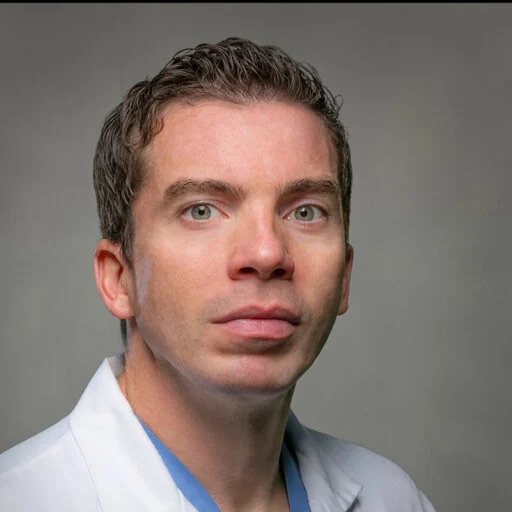
Dr. Philippe E. Spiess is a Senior Member in the Department of Genitourinary Oncology, Chief of Clinical Innovation and Assistant Chief of Surgical Services at Moffitt Cancer Center. He serves as Vice-Chair of the NCCN Bladder and Penile Cancer Panel and as Moffitt’s clinical representative on the NCCN Governance Council and Steering Committee. He is also Chief Medical Officer of OncoBrain AI. The views expressed here are his own.
Published on September 18, 2026
Misha KaurLorem ipsum dolor sit amet, consectetur adipiscing elit. Suspendisse varius enim in eros elementum tristique. Duis cursus, mi quis viverra ornare, eros dolor interdum nulla, ut commodo diam libero vitae erat. Aenean faucibus nibh et justo cursus id rutrum lorem imperdiet. Nunc ut sem vitae risus tristique posuere.
Lorem ipsum dolor sit
Lorem ipsum dolor sit amet, consectetur adipiscing elit. Suspendisse varius enim in eros elementum tristique. Duis cursus, mi quis viverra ornare, eros dolor interdum nulla, ut commodo diam libero vitae erat. Aenean faucibus nibh et justo cursus id rutrum lorem imperdiet. Nunc ut sem vitae risus tristique posuere.

Lorem ipsum dolor sit
Lorem ipsum dolor sit amet, consectetur adipiscing elit. Suspendisse varius enim in eros elementum tristique. Duis cursus, mi quis viverra ornare, eros dolor interdum nulla, ut commodo diam libero vitae erat. Aenean faucibus nibh et justo cursus id rutrum lorem imperdiet. Nunc ut sem vitae risus tristique posuere.
Good to know
Lorem ipsum dolor sit amet, consectetur adipiscing elit. Suspendisse varius enim in eros elementum tristique. Duis cursus, mi quis viverra ornare, eros dolor interdum nulla, ut commodo diam libero vitae erat. Aenean faucibus nibh et justo cursus id rutrum lorem imperdiet. Nunc ut sem vitae risus tristique posuere.